
PDRN Molecular Weight: What It Means for Topical Skincare and Why It Matters
PDRN polydeoxyribonucleotide has become one of the most discussed active ingredients in skincare. It appears on product labels, in clinical aesthetic treatment menus, and in an increasing volume of peer-reviewed research. But the conversation around PDRN in skincare often skips a fundamental question: does molecular weight actually matter for topical use, and if so, why?
The answer is yes and understanding it changes how you evaluate any topical product making PDRN claims.
What PDRN Is and Where It Comes From
PDRN is a mixture of DNA fragments purified nucleotide chains typically derived from salmon or trout sperm. These fragments supply nucleotides that support biological repair processes, and they have been studied for their role in cell proliferation, tissue recovery, and anti-inflammatory activity through adenosine A2A receptor activation and the salvage metabolic pathway.[1]
The molecular weight of PDRN is not fixed. A foundational pharmacology review published in Frontiers in Pharmacology confirmed that PDRN consists of a mixture of deoxyribonucleotides with molecular weights ranging from 50 to 1,500 kDa, with the most represented molecular weight between 80 and 200 kDa and a peak of the distribution at approximately 132 kDa.[2] The binding to adenosine A2A receptors PDRN's primary mechanism appears to be linked specifically to DNA origin, molecular weight, and manufacturing process.[2]
This variability matters because molecular weight determines how PDRN behaves both inside a formula and on the skin.
Lower Molecular Weight and Biological Activity
Research has begun to examine whether molecular weight influences PDRN's biological activity directly and the emerging evidence suggests it does.
A 2025 study published in PMC evaluated three molecular weight fractions of PDRN in human skin cells and observed a size-dependent effect: smaller DNA fragments exhibited greater proliferative activity in both human keratinocytes and dermal fibroblasts. The lowest molecular weight fraction showed the highest efficacy in promoting cell proliferation, upregulating extracellular matrix genes including collagen, and supporting keratinocyte differentiation and epidermal barrier formation.[3]
The Delivery Challenge Every Honest PDRN Article Should Address
Before discussing what molecular weight range is appropriate for topical use, it is necessary to address a fundamental limitation that much PDRN marketing ignores.
Human skin evolved as a barrier. The stratum corneum the outermost layer of skin restricts passive diffusion of large molecules through what is known in dermatology as the 500 Dalton rule: molecules above approximately 500 Daltons in molecular weight are unlikely to penetrate the stratum corneum through passive diffusion alone in biologically meaningful quantities.[4]
| PDRN Molecular Weight | Size Relative to 500 Dalton Threshold |
|---|---|
| 50 kDa (lower end) | Approximately 100× above the passive diffusion ceiling |
| 132 kDa (peak distribution) | Approximately 264× above the passive diffusion ceiling |
| 1,500 kDa (upper end) | Approximately 3,000× above the passive diffusion ceiling |
A 2025 PMC study on plasma-engineered PDRN stated the challenge directly: PDRN's high molecular weight and anionic charge restrict skin penetration, limiting its topical bioavailability. The study explored plasma treatment as a strategy to reduce PDRN's size and modulate its surface charge finding that modified PDRN showed improved cellular uptake and cell migration activity compared to unmodified PDRN.[5]
This research confirms that the delivery challenge is real, that formulation approach matters significantly for topical efficacy, and that the scientific community is actively working to address it.
Why Molecular Weight Range Still Matters for Topical Formulas
Acknowledging the delivery challenge does not eliminate the relevance of molecular weight selection it makes it more important.
Higher molecular weight PDRN fragments have greater chain length and mass, which influences diffusion behavior, distribution within a cosmetic matrix, and formulation compatibility. This is a physical property governed by molecular size. Larger fragments tend to remain concentrated closer to the skin surface and may affect product viscosity and long-term stability if not properly integrated into the formulation system.
Lower molecular weight fragments within the controlled range are generally more compatible with a cosmetic base and as the 2025 PMC research on size-dependent biological activity suggests may retain stronger biological signaling properties.[3]
The most represented molecular weight in pharmaceutical-grade PDRN falls between 80 and 200 kDa with a distribution peak at approximately 132 kDa.[2] Formulations designed around this core range work with PDRN's natural molecular profile rather than attempting to use fragments outside it.
The Role of the Delivery Environment
Because passive penetration through the stratum corneum is limited for molecules of PDRN's size, the formulation environment surrounding PDRN becomes especially important for topical products.
Phospholipid-based delivery systems including lecithin are among the established strategies for supporting the interaction of larger molecules with the skin surface. Phospholipids are structurally analogous to the lipid components of the stratum corneum, which may improve distribution and surface residence time. Humectants and skin-identical emollients create a more favorable surface environment. Antioxidant components protect PDRN from oxidative degradation before and after application.
What Topical PDRN Can Reasonably Claim
This is where honest communication matters most.
The strongest PDRN clinical evidence comes from injectable and wound-healing applications where PDRN is delivered directly to viable tissue at concentrations and depths that topical products cannot replicate through passive diffusion. Applying injectable outcome data directly to topical claims extends the research beyond what it supports.
For topical use, the appropriate framing is surface-level benefit: supporting hydration, texture, and the skin's surface environment not deep tissue repair or dermal regeneration at the level documented in injectable research.
A 2025 review of PDRN in skincare and cosmetics confirmed that PDRN has demonstrated effects in dermatological treatments including collagen synthesis enhancement and elasticity improvement through A2A receptor activation with these findings coming primarily from injectable and clinical studies while noting growing interest in topical cosmetic applications as formulation technology continues to develop.[6]
Sound mechanism. Ongoing formulation development. Topical benefit appropriately distinct from injectable outcomes. That framing is what separates scientifically credible PDRN claims from overclaiming.
Key Takeaways
- PDRN exists across a broad molecular weight spectrum, typically 50 kDa to 1,500 kDa, with the most represented range between 80 and 200 kDa and a distribution peak at approximately 132 kDa. This profile is documented in the peer-reviewed pharmacology literature.
- Research on molecular weight fractions suggests a size-dependent relationship with biological activity with lower molecular weight fragments showing greater proliferative activity in human skin cells in vitro. Molecular weight is a biologically relevant variable, not merely a specification.
- The 500 Dalton rule means PDRN is unlikely to penetrate the stratum corneum through passive diffusion alone in biologically meaningful quantities. This is a necessary context for evaluating topical PDRN claims, not a reason to dismiss the ingredient.
- The formulation environment surrounding PDRN including delivery architecture, phospholipid systems, pH management, and oxidative protection determines whether topical PDRN remains active and available for surface-level interaction.
- Topical PDRN and injectable PDRN operate under fundamentally different parameters. Claims based on injectable research should not be applied directly to topical products without acknowledging this distinction.
Honest evaluation of any topical PDRN product requires asking:
- What molecular weight range is specified?
- What is the delivery environment and how is PDRN protected within the formula?
- Are the claims calibrated to topical evidence rather than injectable outcomes?
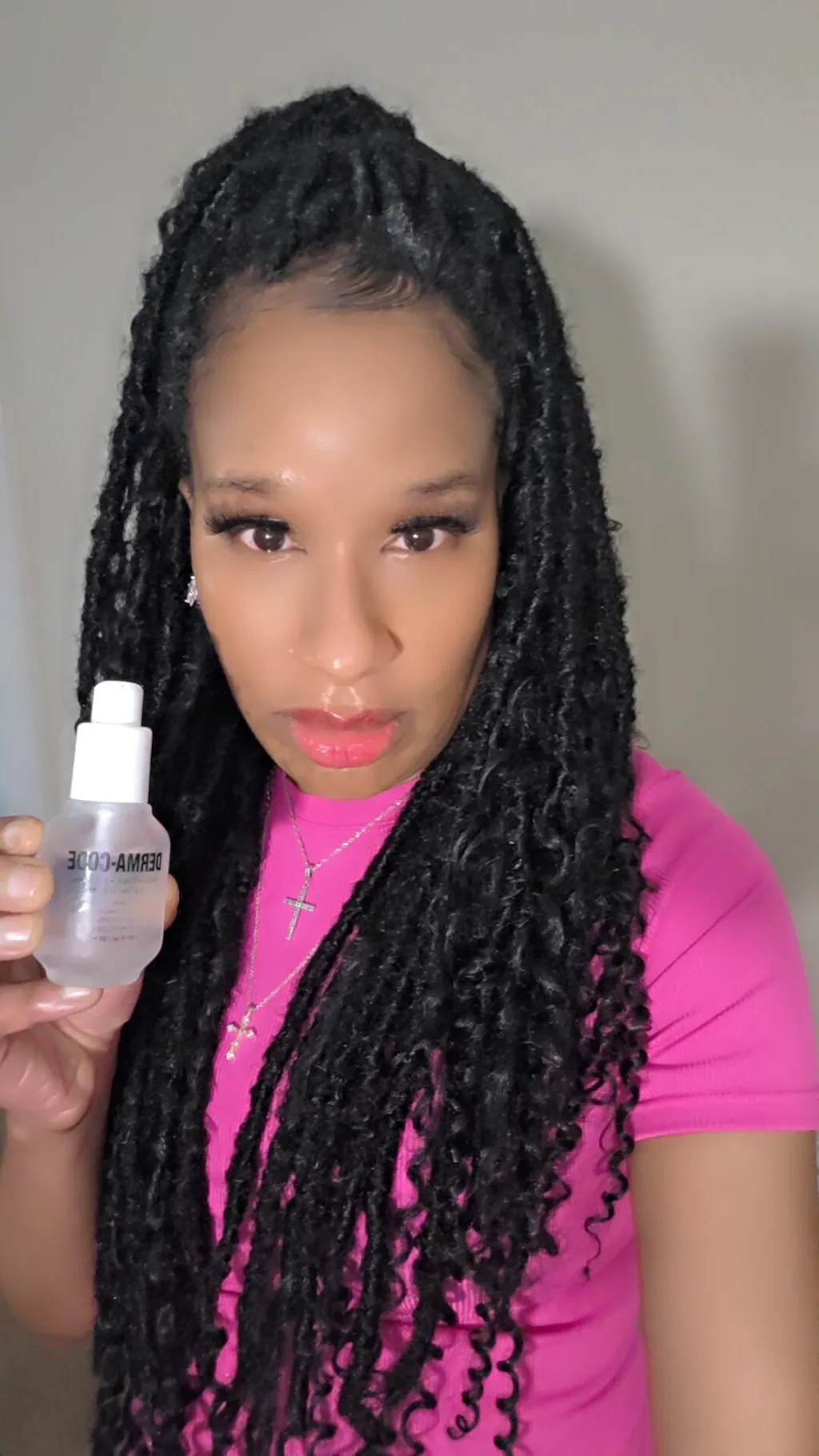
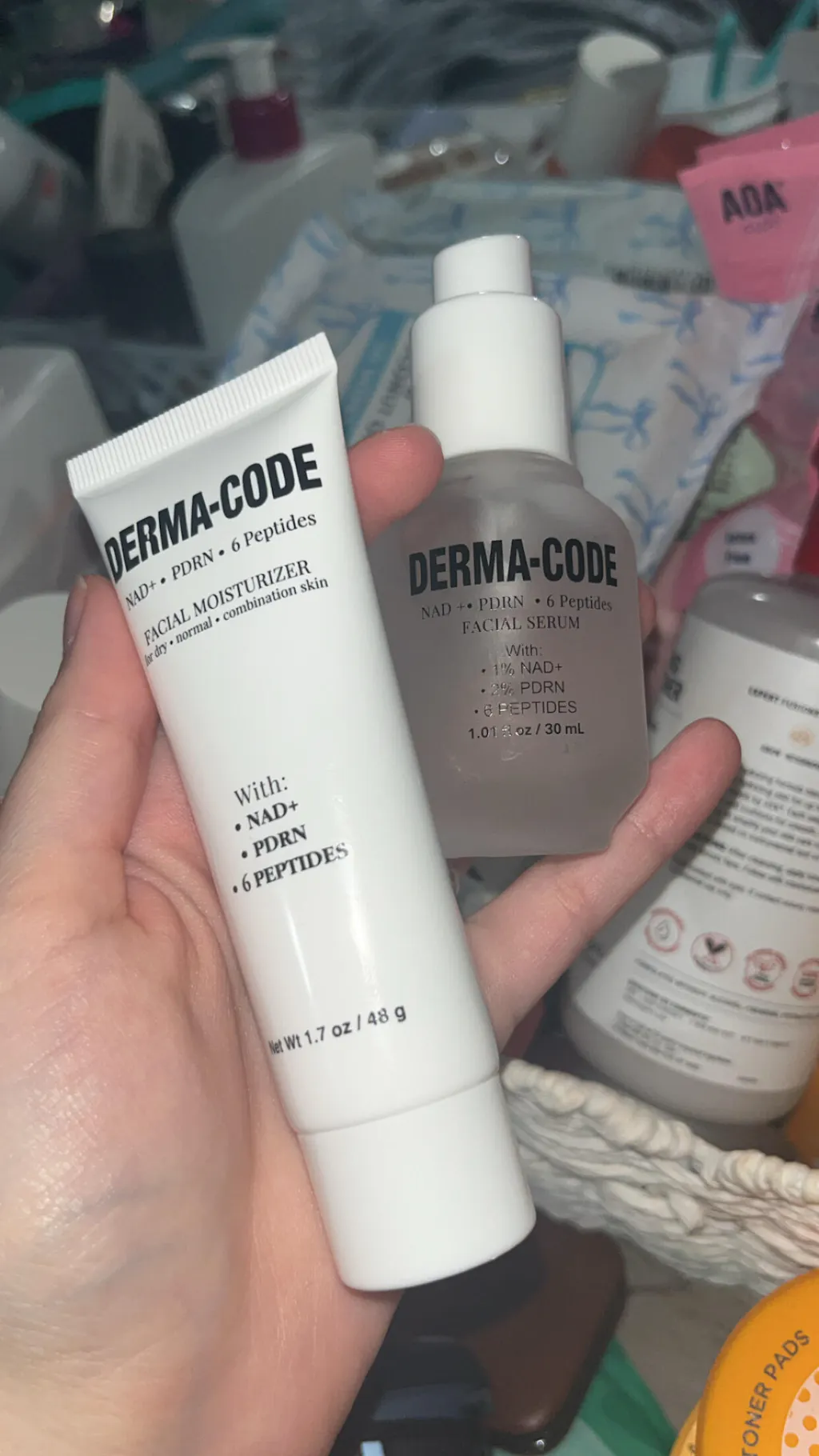
The DERMA-CODE™ Pulse Serum and Locked In Moisturizer use low-molecular-weight PDRN in the 50–300 kDa range selected for topical compatibility.
References
[1] PMC. Polydeoxyribonucleotide: A Promising Biological Platform to Accelerate Impaired Skin Wound Healing. 2021.
https://pmc.ncbi.nlm.nih.gov/articles/PMC8618295/
[2] Squadrito F, et al. Pharmacological Activity and Clinical Use of PDRN. Frontiers in Pharmacology. 2017.
https://pmc.ncbi.nlm.nih.gov/articles/PMC5405115/
[3] PMC. Anti-Aging Efficacy of Low-Molecular-Weight Polydeoxyribonucleotide Derived from Paeonia lactiflora. 2025.
https://pmc.ncbi.nlm.nih.gov/articles/PMC12785872/
[4] Bos JD, Meinardi MMHM. The 500 Dalton Rule for the Skin Penetration of Chemical Compounds and Drugs. Experimental Dermatology. 2000.
https://www.semanticscholar.org/paper/The-500-Dalton-rule-for-the-skin-penetration-of-and-Bos-Meinardi/76aac46639316df0ebc13c027beccfa14c5f87a2
[5] PMC. Plasma-Engineered PDRN: Surface Charge Neutralization and Nanosizing Enhance Uptake and Regeneration Potential. 2025.
https://pmc.ncbi.nlm.nih.gov/articles/PMC12473307/
[6] Brieflands. Polydeoxyribonucleotide in Skincare and Cosmetics: Mechanisms, Therapeutic Applications, and Advancements Beyond Wound Healing and Anti-aging. 2025.
https://brieflands.com/journals/jssc/articles/159728
0 comments