
Polynucleotides vs PDRN: What the Aesthetic Medicine Research Actually Shows
Polynucleotides have moved from niche clinical conversations into mainstream skincare language fast. You see the terms on injectable menus, skin booster protocols, and increasingly on cosmetic product labels. But the research behind them is more nuanced than the marketing suggests and understanding that nuance matters if you want to evaluate any product making polynucleotide claims honestly.
This article summarizes what a 2024 peer-reviewed review published in the International Journal of Molecular Sciences actually found when it examined the current polynucleotide and PDRN literature in aesthetic medicine. The goal is to separate what is documented from what is still developing and to make clear where the evidence is strong and where it is not.[1]
Polynucleotides and PDRN: Related, But Not the Same
These two terms are used interchangeably in everyday skincare conversation. The research makes clear they are related but distinct and that distinction matters for evaluating claims honestly.
PDRN Polydeoxyribonucleotide is a mixture of DNA fragments typically derived from salmon. These fragments supply nucleotides that support repair processes and have been studied for their role in cell proliferation, angiogenesis, and anti-inflammatory activity. The mechanistic research on PDRN is more developed than for polynucleotides broadly.
Polynucleotides used in injectable aesthetic treatments generally have longer chains, higher molecular weight, and a three-dimensional scaffold structure that differs structurally from PDRN. That structural difference may influence how they interact with the extracellular matrix and is part of why the two terms, though related, should not be used interchangeably.
The Difference Between Injectable and Topical Applications
This distinction is worth stating clearly before reviewing the clinical literature because it is frequently blurred in skincare marketing.
The research summarized in this article involves injectable treatments administered by medical professionals, delivered directly into the dermis at concentrations and depths that topical products cannot replicate. Applying injectable research findings directly to topical cosmetic claims is not scientifically accurate.
Any product making claims based on injectable polynucleotide data without acknowledging this distinction is extending the research beyond what it supports.
How PDRN Is Understood to Work
The review describes two primary pathways through which PDRN is thought to act.
The first is the A2A receptor pathway. PDRN can stimulate adenosine A2A receptors, triggering a signaling cascade that influences transcription factors including NFκB, CREB, and HIF-1. This pathway connects to vascular growth factors like VEGF and angiopoietin, which are involved in angiogenesis and tissue recovery. In practical terms, it supports a more favorable environment for repair particularly in stressed or depleted tissue.
The second is the salvage pathway. PDRN fragments can be broken down into nucleotides that are reused in DNA synthesis a biological recycling mechanism that helps cells maintain sufficient building blocks for replication and repair.
Preclinical work has also shown PDRN supporting repair of UV-induced DNA lesions in fibroblasts, influencing melanogenesis pathways, and affecting mitochondrial biogenesis and metabolic activity.
These findings describe what may be happening at the cellular level. They are not direct guarantees of specific visible outcomes in every individual.
Where Polynucleotides Are Being Used in Aesthetic Medicine
The majority of clinical research on polynucleotides involves injectable and device-assisted treatments performed in medical settings. The following summary reflects that medical literature not over-the-counter topical skincare.
Skin Quality and Skin Boosters
Multiple clinical papers describe polynucleotide-based skin boosters injected into the dermis to improve skin texture, elasticity, hydration, and fine lines. Some studies and reviews report meaningful improvements in elasticity and wrinkle depth. Others show more modest change. Evidence levels range from expert opinion and case series to a limited number of randomized controlled trials. The overall trend is positive, but not every study is high quality.
Wrinkles and Biostimulatory Applications
Several clinical studies, including randomized controlled trials, compare polynucleotide-based fillers to hyaluronic acid and polycaprolactone in areas like crow's feet and lateral canthal lines. Across these studies, polynucleotide products generally show improvement in wrinkle depth, texture, and elasticity, with favorable tolerability and minimal adverse events reported.
Scars, Erythema, and Stretch Marks
The review also covers polynucleotides in acne scars, post-surgical scar prevention, facial erythema, and stretch marks. Several small studies and case series report improvements in scar quality, texture, and patient satisfaction when polynucleotides are part of the treatment protocol. The authors note limitations clearly: many of these studies have small sample sizes, variable protocols, and short follow-up periods.
Device Combinations
Early data exists on polynucleotides combined with microneedle radiofrequency for periorbital wrinkles and melasma. In most cases, adding polynucleotides appears to enhance outcomes compared to the device alone, particularly for elasticity and texture. These protocols sit firmly in procedural medicine.
The Scaffold Structure: A Different Kind of Support
One of the more structurally interesting sections of the review examines polynucleotides beyond their chemistry.
Scanning electron microscopy shows polynucleotides forming interconnected three-dimensional scaffold structures. These structures are smaller than a typical fibroblast and may provide a dense network for cells to attach to.
The authors connect this to age-related changes in the extracellular matrix. As collagen becomes fragmented with age, fibroblasts lose mechanical anchoring points and reduce collagen production. A polynucleotide scaffold in that environment could theoretically provide new attachment sites and help restore some of that mechanical signaling.
What the Safety Data Shows
One consistent finding across the polynucleotide and PDRN literature is a favorable safety profile.
Across the studies reviewed, no serious adverse events were reported. Most side effects were mild and transient temporary redness or swelling at injection sites. Products are described as highly biocompatible, with purified salmon-derived sources having a well-established safety history in medical use.
The authors still call for longer-term follow-up studies, but the available data consistently supports tolerability when these materials are used appropriately.
Where the Evidence Is Strong and Where It Is Not
The review grades evidence levels directly, which is one of its most useful features.
| Evidence Level | Type | Where It Appears in This Literature |
|---|---|---|
| Level I — II | Randomized controlled trials | A limited number of specific filler protocols |
| Level III — IV | Case series and small cohort studies | The majority of polynucleotide research in aesthetics |
| Level V | Expert opinion and mechanistic overviews | A meaningful portion of the available literature |
There is also considerable variability across studies in dosing, injection depth and pattern, combination therapies, and outcome measurement. Large, well-controlled trials are still needed. Optimal protocols are not yet standardized.
The signal from the research is promising particularly around skin quality, texture, and wrinkle improvement. But polynucleotides are not a solved equation, and the review states this clearly more than once.
Key Takeaways
- PDRN and polynucleotides are related molecules but not identical and the mechanistic research on PDRN is more developed than for polynucleotides broadly.
- The strongest polynucleotide clinical evidence comes from injectable aesthetic treatments in medical settings. Most studies are level III-IV evidence. A limited number of randomized controlled trials exist for specific protocols.
- The A2A receptor pathway and salvage pathway are the two primary mechanisms through which PDRN is understood to act supporting repair signaling and nucleotide recycling respectively.
- Safety data across the literature is consistently favorable, with no serious adverse events reported and mild, transient side effects at injection sites.
- Topical PDRN applications operate under fundamentally different parameters than injectable treatments. Research from one context does not directly translate to the other.
Honest evaluation of any polynucleotide product requires asking:
- What type of research is being cited injectable or topical?
- At what delivery route and concentration was it studied?
- Do the claims match what the evidence actually supports?
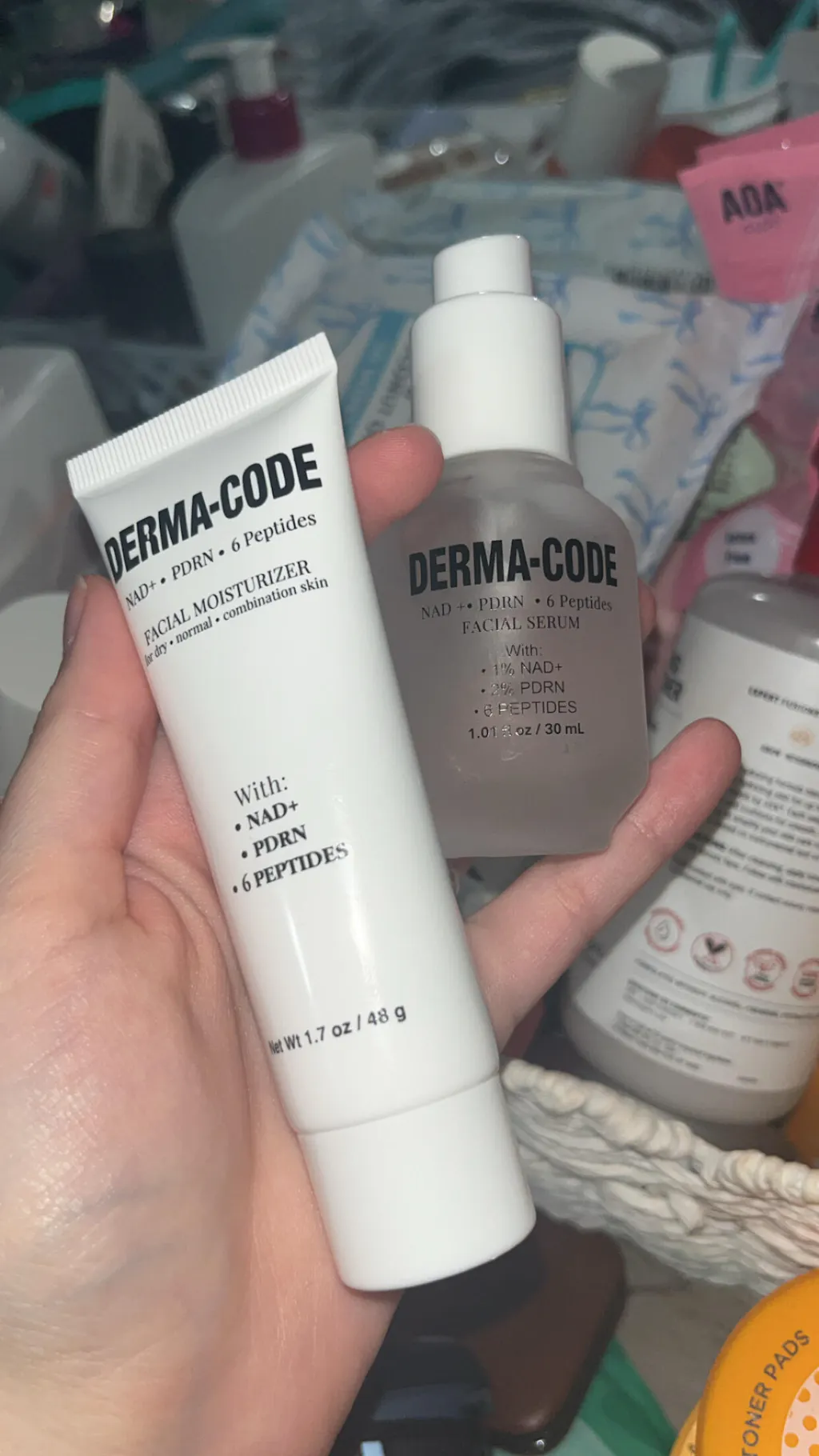
The DERMA-CODE™ Pulse Serum uses PDRN specifically Sodium DNA at 2% concentration.”
Reference
[1] Lee KWA, Chan KWL, Lee A, et al. Polynucleotides in Aesthetic Medicine: A Review of Current Practices and Perceived Effectiveness. International Journal of Molecular Sciences. 2024;25(15):8224.
https://pmc.ncbi.nlm.nih.gov/articles/PMC11311621/

0 comments