
I’m a pharmacist. I’m also a skincare snob.
I will spend $200 on a 1-ounce anti-aging product without blinking — but I’ve also been burned, disappointed, and underwhelmed by expensive skincare that promised everything and delivered very little.
So when I started watching Derma Code, I watched closely.
And what stood out to me wasn’t just the product.
It was the woman behind the brand.
I could feel that she understood the woman who isn’t trying to fight aging — but still wants to look as fresh, beautiful, vibrant, and confident as possible while doing it.
That mattered to me.
That heart is the only reason I entertained giving Derma Code a try.
And I am so glad I did.
Derma Code is beautiful.
Intentional.
Effective.
I’ve had my product for over a month, and usually by this time, many expensive products I’ve used start feeling lackluster. Not this one.
Derma Code is still going strong.
I wake up looking fresh. Beautiful. Rested. Like my skin is cared for on a deeper level.
The fine lines around my eyes look softer. My skin looks smoother. And as a woman in my 50s dating a younger man in his 30s, let me be honest — it matters to me that I keep my skin looking as fresh as possible.
When I travel, Derma Code is as important as my toothbrush.
I need it.
I don’t get caught up in skincare hype. I care about results. I want fine lines and wrinkles to stay at bay. I want my skin to look alive, healthy, and beautiful.
Derma Code feels like confidence in a beautiful bottle.
If you want to wake up looking beautiful…
If you want to keep them guessing your age…
If you want skincare that feels intentional, elevated, and effective…
Derma Code is not just something you try.
It becomes something you need.
I’m a pharmacist — did I mention that? Lol.
I’ve worked with and used high-level skincare.
Derma Code belongs on that level.
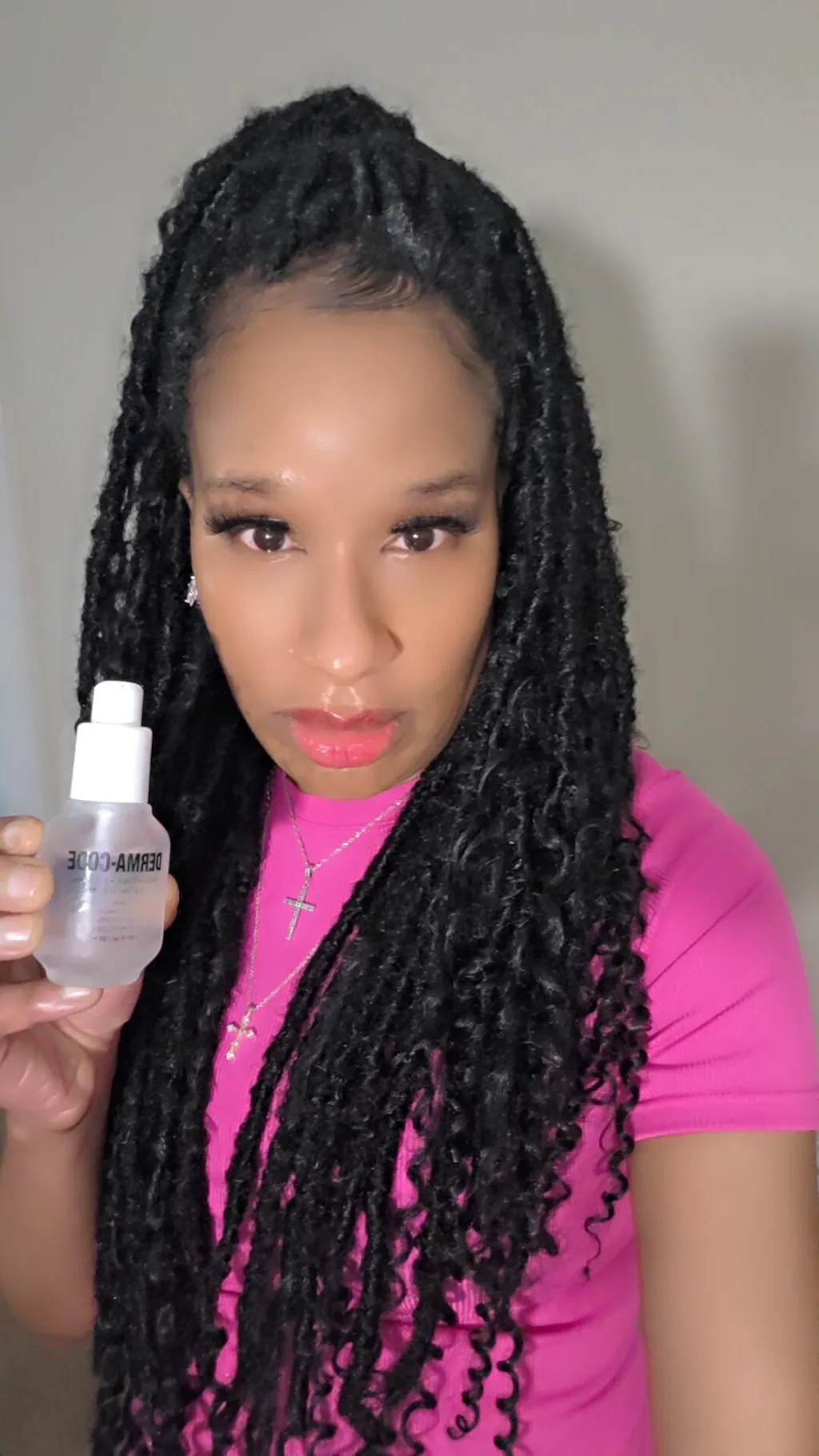
These products are incredible. I’m going to be 40 this year and am starting to see some laxity in my neck so I started searching Reddit for the best products for that and really concluded that these are absolutely the BEST products to help. I feel like I’m already starting to see results just a week later!
I absolutely love the serum! It’s my go to! It’s light weight but moisturizing it doesn’t leave a film over my face! I have noticed a huge difference in my dehydration lines on my forehead!
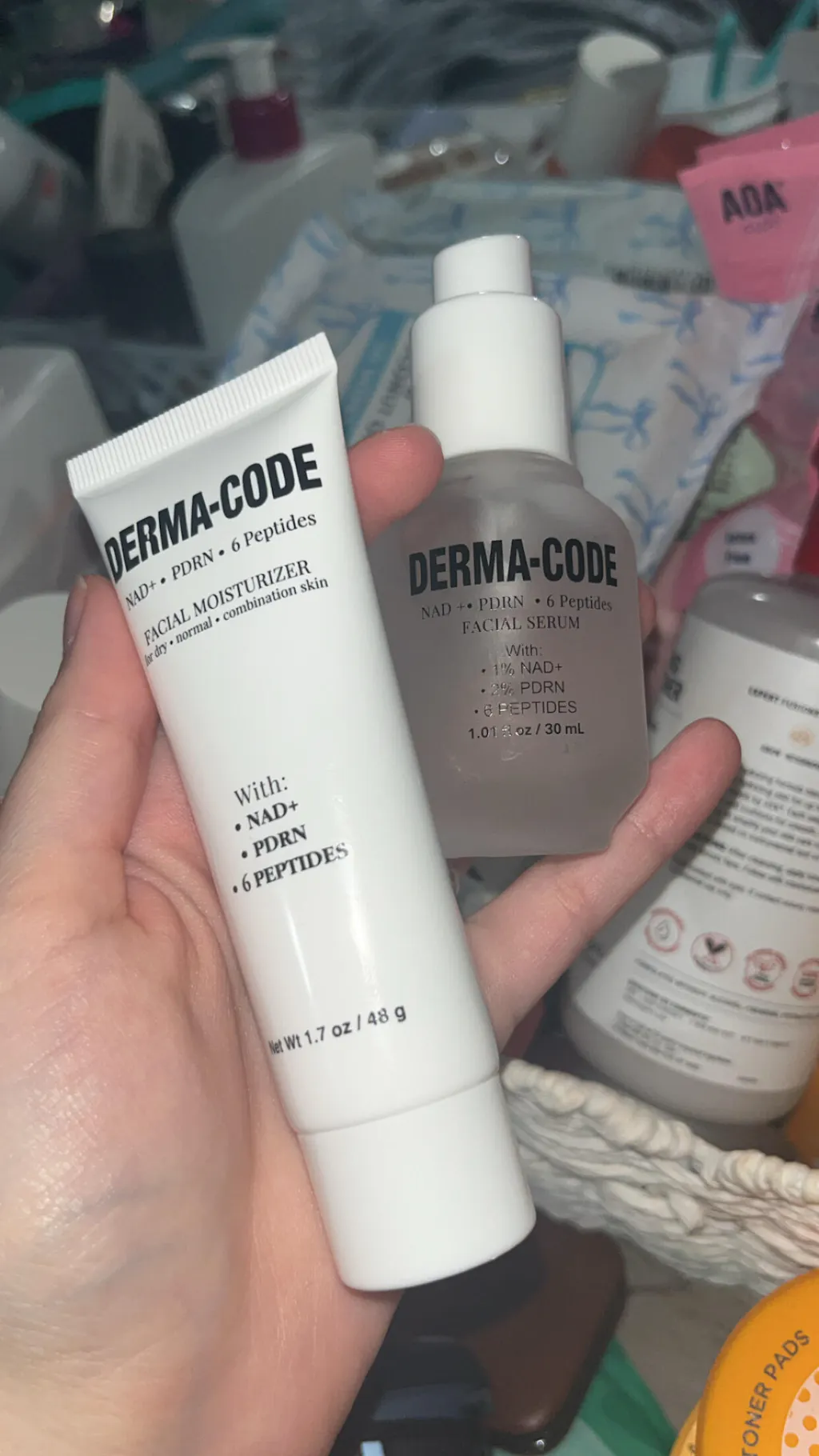
I've been using this duo for over a week and i love how my skin feels and looks. The texture is lightweight but still deeply hydrating. My barrier has been compromised i can tell that these products are helping tons. I love how it doesn't leave my skin feeling sticky. The moisturizer does have a slight light scent but i don't mind it at all. They have gained a new customer from me!
Im on my first bottle and so far i am loving how soft my skin feels, I have dry sensitive skin and prone to breakouts and so far my skin is reacting very well using this serum and moisturizer. I love it doesnt leave my face sticky or greasy looking. Im unsure if im imagining it, but the moisturizer does have a scent, but its very light and goes away once applied. I actually dont mind it.
Thank you so much for taking the time to share this. We are really glad to hear your skin is responding well, especially given dryness and sensitivity.
You are not imagining the light scent. Our formulas are fragrance-free, but some raw materials, particularly certain peptides and botanical-derived components, can have a very faint natural odor that dissipates quickly after application. We intentionally avoid masking agents so the skin experiences the formula exactly as it is.
We also appreciate you noting the texture and finish. That non-sticky, non-greasy feel was very intentional and designed specifically for reactive and breakout-prone skin types.
Thank you again for trusting us with your skin and for your thoughtful feedback. It truly helps others who are navigating similar concerns.
Warmly,
DERMA-CODE™ Team