
PDRN vs Retinol: What the Science Actually Shows About Skin Renewal
For decades, retinol has been the default recommendation for visible skin aging. It is well-studied, widely prescribed, and genuinely effective. But the mechanism behind its results and the side effects that come with it are now better understood than ever.
A newer class of molecules called polynucleotides, specifically PDRN (Polydeoxyribonucleotide), is showing up in peer-reviewed research and clinical practice as a fundamentally different approach to renewal. Not a replacement. A different road entirely.
This article explains how both work, what the research actually shows, and why the distinction between them matters for anyone choosing a long-term skincare strategy.
What Retinol Actually Does in the Skin
Retinol works by binding to nuclear retinoid receptors, triggering accelerated cell turnover and increased collagen production over time. The results are real and well-documented across decades of clinical research.
But the mechanism involves a stress response.
Research published in Dermatology Research and Practice (2024) confirmed that retinoid-induced irritation operates through multiple pathways simultaneously: inflammatory cytokine release, immune cell infiltration, and disruption of the stratum corneum barrier measurable as increased transepidermal water loss (TEWL).[1]
A 2025 study in Frontiers in Microbiology documented that during the early phase of retinol use, cellular protective mechanisms including energy metabolism and antioxidant capacity are transiently compromised before the skin adapts. The researchers described this as "an imbalanced local skin environment during the initial phase of retinol stimulation."[2]
This is not a reason to avoid retinol. It is a reason to understand what you are asking your skin to do when you use it and whether that trade-off makes sense for your skin's current condition.
- Accelerates cell turnover
- Increases collagen synthesis over time
- Improves visible texture and fine lines with consistent use
- Initial irritation is well-documented erythema, burning, stinging, and desquamation affect a meaningful proportion of first-time users
- Retinoids measurably increase TEWL during early use, indicating temporary barrier compromise
- Reactive, sensitive, or barrier-compromised skin may struggle with the adaptation phase
- Results depend on consistent long-term use and discontinuation often reverses gains
What PDRN Actually Does in the Skin
PDRN is composed of purified DNA fragments the same nucleotide building blocks the skin uses for its own repair processes. It first gained clinical recognition in wound healing and post-procedure medicine before moving into cosmetic science.
Its primary mechanism is different from retinol at a fundamental level.
A systematic review of over 90 studies confirmed that PDRN promotes tissue repair primarily through activation of the adenosine A2A receptor and the salvage pathway biological mechanisms the skin already uses, rather than an externally imposed stress response.[3]
It is worth noting that the most robust PDRN research comes from wound healing, post-procedure recovery, and injectable applications. Interest in topical cosmetic use continues to grow, and the receptor mechanisms are the same but topical delivery operates under different parameters than medical-grade administration.
Through A2A receptor activation, PDRN has been shown to support fibroblast proliferation and collagen synthesis, modulate inflammatory mediators reducing chronic inflammatory tone, promote angiogenesis through VEGF upregulation, and provide nucleotides directly usable by cells through the salvage metabolic pathway.[4, 5]
A 2024 review published in Dermatologic Surgery specifically examined polynucleotides in skin regeneration through this receptor pathway, affirming the mechanism's relevance to both aesthetic and clinical applications.[6]
Importantly, PDRN supports the environment fibroblasts need to function rather than forcing an output through stress signaling.
- Supports skin repair signaling through existing biological pathways
- Reduces inflammatory tone rather than triggering it
- Compatible with sensitive, reactive, and barrier-compromised skin
- Supports hydration, texture, and elasticity through cell-level mechanisms
- Results are gradual, not immediate requires consistency over weeks to months
- Requires an appropriate formulation environment to maintain structural integrity over time
- Topical delivery has different parameters than injectable PDRN used in clinical settings
The Core Difference: Stress-Based vs Support-Based Renewal
This is not a value judgment. Both mechanisms have their place in evidence-based skincare. The distinction matters because mechanism determines which skin types and conditions each approach is suited for.
Retinol induces controlled stress that the skin adapts to over time. The adaptation produces the improvement. For skin that can tolerate the adaptation phase, this works. For skin that cannot or skin that is already compromised, inflamed, or reactive the stress can exceed the benefit.
PDRN activates repair pathways the skin is already running. Because it works with existing repair signaling rather than triggering a stress response, it does not carry the documented irritation profile associated with retinol's adaptation phase.
Side by Side: What the Research Shows
| Retinol | PDRN | |
|---|---|---|
| Primary mechanism | Nuclear receptor binding, accelerated cell turnover | A2A receptor activation, salvage pathway support |
| Irritation profile | Well-documented initial irritation phase [1, 2] | No irritation mechanism; anti-inflammatory profile [3, 5] |
| Barrier impact | Measurable TEWL increase during early use [1] | Supports barrier through fibroblast and collagen signaling [4] |
| Speed of results | Visible improvement within weeks for some | Gradual improvement over consistent use |
| Suitable for reactive skin | Requires managed adaptation | Generally well-tolerated |
| Stability in formula | Degrades under UV and heat | Requires controlled pH and oxidation protection |
| Research depth | Decades of clinical data | Growing body of peer-reviewed evidence; established in wound healing and aesthetic medicine |
Key Takeaways
- The choice between retinol and PDRN is not about which is better. It is about which mechanism is appropriate for your skin's current state and tolerance.
- Retinol's mechanism is stress-based. It works by triggering a controlled inflammatory response the skin adapts to. This is documented in peer-reviewed research, not a criticism.
- PDRN's mechanism is support-based. It activates the adenosine A2A receptor and salvage pathway, providing resources for processes the skin is already running.
- Both require consistency and proper formulation to deliver results.
- PDRN must be stabilized in any topical formula to remain active. Molecular weight and delivery architecture both determine whether it functions or breaks down before it reaches the skin.
- The most established PDRN research comes from medical and wound-healing applications. Topical use is a growing area with a sound mechanistic foundation, but the delivery context is different and results should be evaluated accordingly.
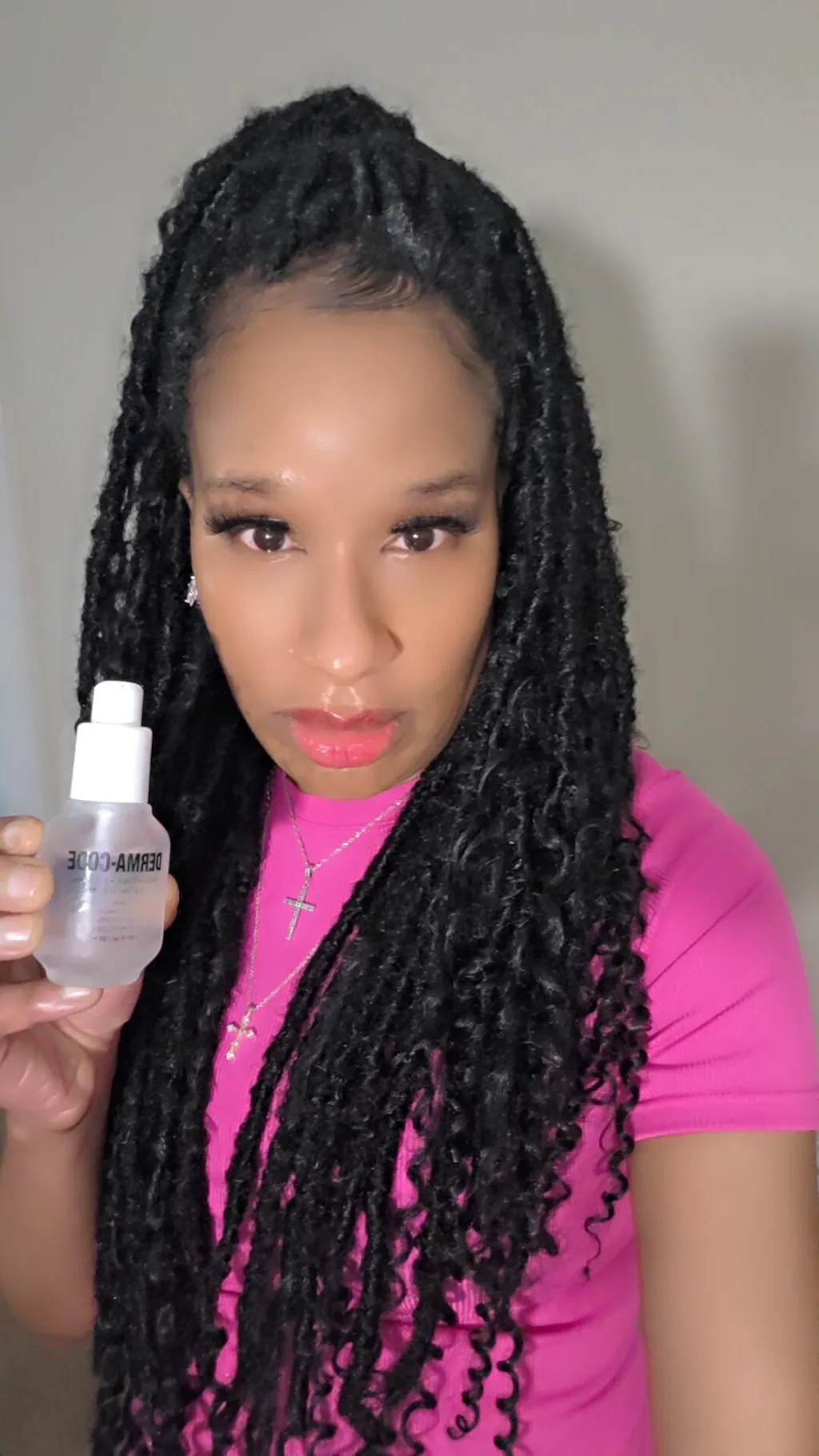
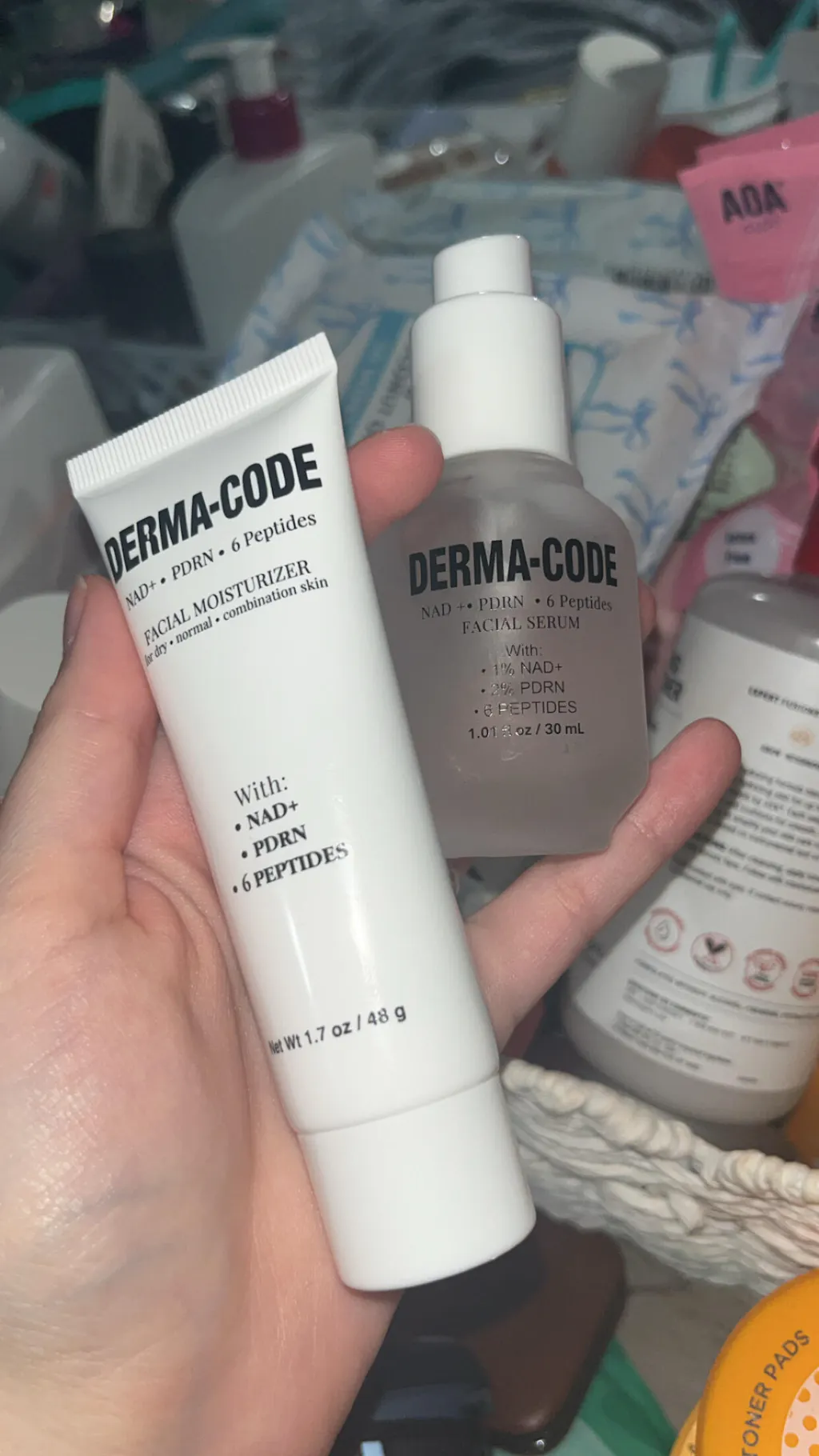
The DERMA-CODE™ Pulse Serum and Locked In Moisturizer are formulated around PDRN’s repair-supportive pathway. For a complete barrier-first routine, see the full system.
References
[1] Narsa AC, et al. A Comprehensive Review of the Strategies to Reduce Retinoid-Induced Skin Irritation in Topical Formulation. Dermatology Research and Practice. 2024.
https://onlinelibrary.wiley.com/doi/10.1155/2024/5551774
[2] Frontiers in Microbiology. Dynamic multi-omics mechanisms underpinning retinol tolerance: stage-specific reconstruction of skin barrier function and host-microbiome metabolic interactions. 2025.
https://pmc.ncbi.nlm.nih.gov/articles/PMC12598784/
[3] Galeano M, et al. The effects of polydeoxyribonucleotide on wound healing and tissue regeneration: a systematic review of the literature. PubMed. 2020.
https://pubmed.ncbi.nlm.nih.gov/32757710/
[4] PMC. Polydeoxyribonucleotide: A Promising Biological Platform to Accelerate Impaired Skin Wound Healing. 2021.
https://pmc.ncbi.nlm.nih.gov/articles/PMC8618295/
[5] Khan A, et al. Polydeoxyribonucleotide: A promising skin anti-aging agent. Chinese Journal of Plastic and Reconstructive Surgery. 2022.
https://sbti.com.br/wp-content/uploads/2024/07/1-s2.0-S2096691122000723-main.pdf
[6] Polynucleotides in Skin Regeneration: Targeting the Adenosine A2A Receptor and Salvage Pathway. Dermatologic Surgery. November 2024.
https://doi.org/10.1097/DSS.0000000000004438
0 comments