
NAD⁺, PDRN, and Peptides: Why Combination Matters More Than Single-Ingredient Approaches
Skincare conversations tend to focus on individual ingredients. NAD⁺ for cellular energy. PDRN for regenerative signaling. Peptides for structural communication. Each of these has a legitimate and well-documented role in skin biology. But the more interesting question and the one the research is beginning to address directly is whether these molecules work better together than they do alone.
This article examines what the science actually shows about multi-active combination approaches in skincare, why non-overlapping mechanisms matter, and what distinguishes a coherent combination from a crowded formula.
Why Single-Ingredient Approaches Have Limits
Skin aging is not a single-pathway problem. It involves simultaneous deterioration across multiple biological systems: declining cellular energy, accumulating DNA damage, loss of structural proteins, compromised barrier function, and chronic low-grade inflammation.
A 2025 peer-reviewed paper published in Polymers on current approaches in cosmeceuticals stated the issue directly: single-target peptide approaches fail to address the intricate biology of the skin, where signaling pathways interact in complex ways that influence various physiological processes. The paper noted that the efficacy of single-target peptide therapies is often limited because they do not adequately consider the broader biological context.[1]
What Combination Research Actually Shows
The strongest evidence for combination approaches in skincare comes from peptide research.
A study published in the International Journal of Cosmetic Science examined what happens when peptides with distinct, non-overlapping mechanisms are combined. The findings were specific: certain peptide combinations activated biological pathways associated with skin repair that neither peptide activated individually. The researchers described this as synergistic activation meaning the combination produced an effect beyond what either component achieved alone.[2]
The same study also found that combining peptides with niacinamide a NAD⁺ precursor produced more holistic in vitro rejuvenation than peptides alone, suggesting that supporting cellular energy pathways alongside structural signaling may offer complementary benefits.[2]
The Three-Pathway Logic
NAD⁺, PDRN, and peptides each address distinct biological processes and those processes are interdependent.
Mechanism: Cellular energy infrastructure, DNA repair substrate, sirtuin activation
Mechanism: A2A receptor activation, nucleotide salvage, fibroblast support
Mechanism: Receptor-specific signaling, collagen communication, inflammatory modulation
Why Mechanism Overlap Matters
Not all combination formulas are built around complementary mechanisms. Many use multiple ingredients that target the same pathway either because the formula was designed to impress on paper or because the scientific basis for selection was not rigorous.
When ingredients target the same receptor or signaling pathway, they risk offering diminishing returns or redundant signaling rather than amplified benefit. Peptides targeting different biological pathways may provide complementary effects, while peptides targeting the same pathway risk signal saturation.
Research on peptide combinations confirmed this directly. The International Journal of Cosmetic Science study found that specific combinations of acetyl hexapeptide-3 and tripeptide-10 citrulline, acting through different mechanisms, demonstrated synergistic clinical efficacy while combinations addressing the same pathway did not show the same enhancement.[2]
The Formulation Environment Question
Combination efficacy also depends on whether the formulation environment protects each active ingredient.
NAD⁺ is sensitive to oxidation and degrades under light and heat. Like many biologically active molecules, PDRN requires an appropriate formulation environment to maintain structural integrity over time. Peptides require structural integrity to maintain their signaling function.
Key Takeaways
- Skin aging is multifactorial. Single-ingredient approaches address one pathway while leaving others unaddressed. Published research confirms that single-target peptide strategies often fail to account for the broader biological context of skin aging.
- Research on peptide combinations published in the International Journal of Cosmetic Science found that peptides with non-overlapping mechanisms can activate synergistic repair pathways not achieved by either peptide alone.
- NAD⁺, PDRN, and peptides address distinct biological processes energy-related cellular function, regenerative signaling, and structural communication that are interdependent rather than redundant.
- Peptides targeting different biological pathways may provide complementary effects. Peptides targeting the same pathway risk diminishing returns or signal saturation rather than amplified benefit.
- The relationship between cellular energy support and repair signaling is biologically plausible, but the specific interaction between topical NAD⁺ and peptide efficacy in finished formulas has not yet been directly demonstrated in a controlled clinical study.
- Formulation stability is as important as ingredient selection. A combination formula that does not protect sensitive actives from degradation delivers the appearance of synergy without the biology behind it.
- The question to ask of any multi-active product is not how many ingredients it contains but whether those ingredients address different biological processes, use non-overlapping mechanisms, and are present and stable enough to produce a meaningful effect.
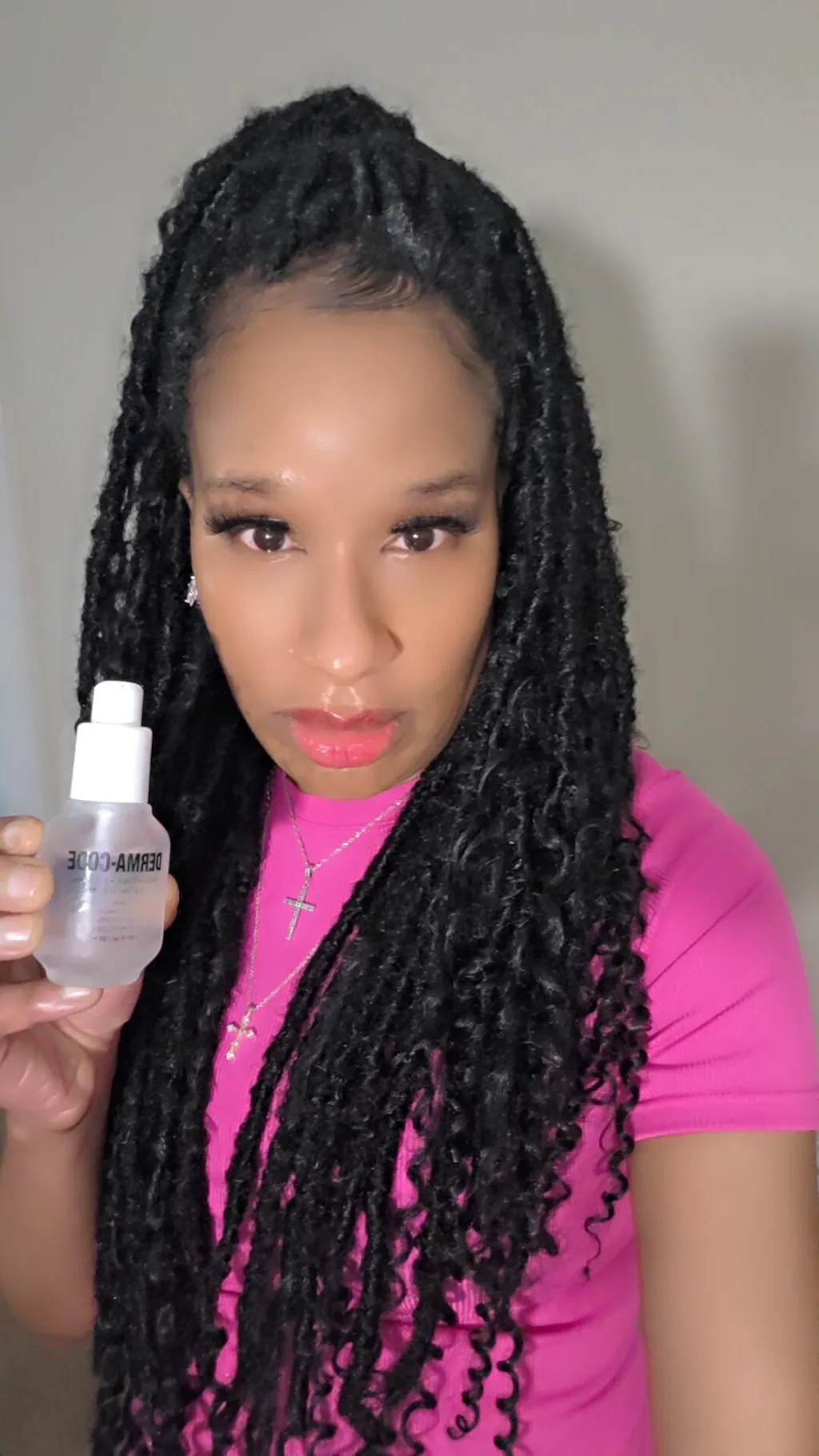
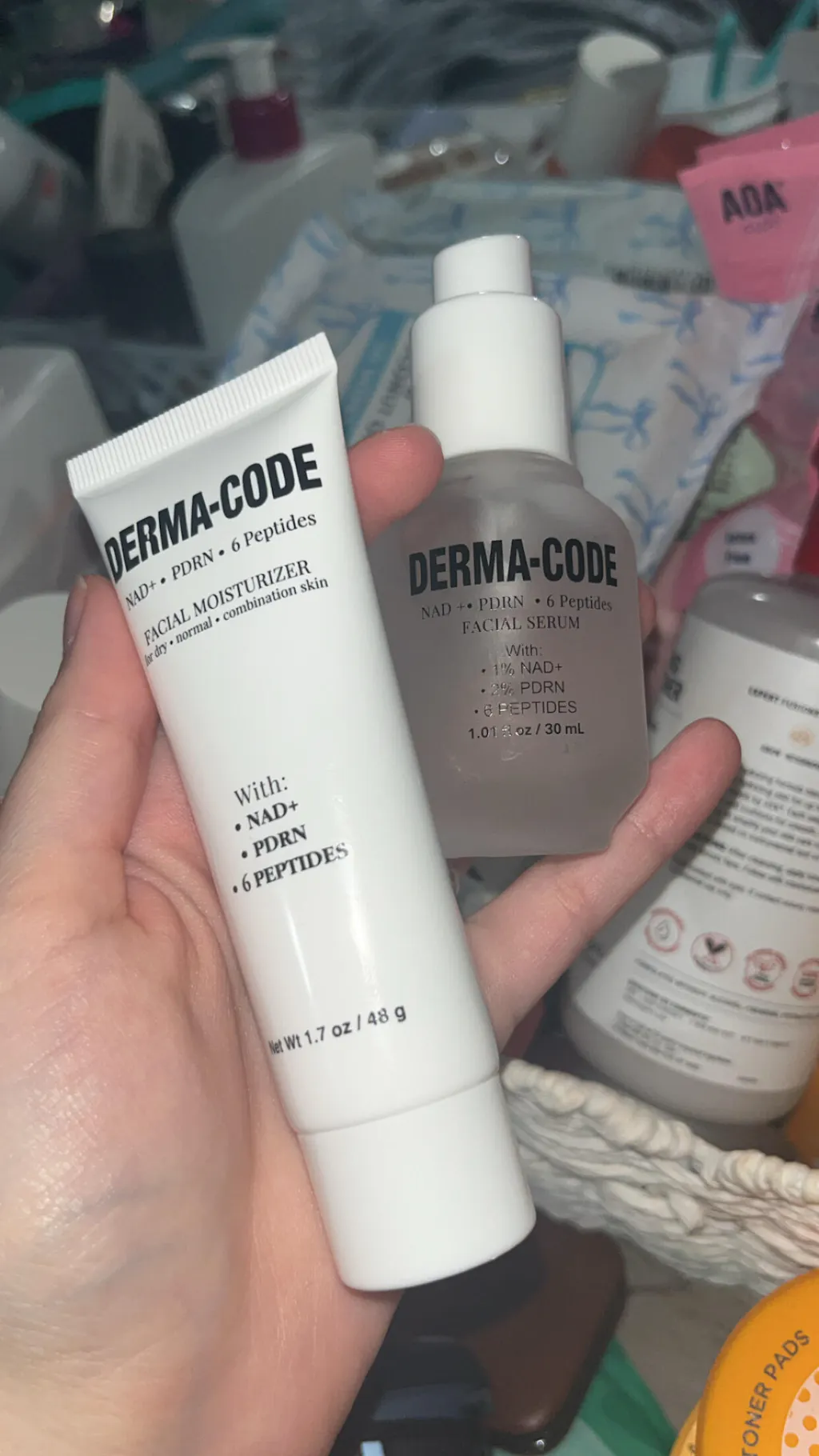
The DERMA-CODE™ Pulse Serum was formulated around this exact principle. For the complete system, see the Serum and Moisturizer duo.
References
[1] Badilli U, Inal O. Current Approaches in Cosmeceuticals: Peptides, Biotics and Marine Biopolymers. Polymers. 2025;17(6):798.
https://pmc.ncbi.nlm.nih.gov/articles/PMC11946782/
[2] Flagler MJ, et al. Combinations of Peptides Synergistically Activate the Regenerative Capacity of Skin Cells In Vitro. International Journal of Cosmetic Science. 2021.
https://onlinelibrary.wiley.com/doi/abs/10.1111/ics.12725
[3] Bhasin S, et al. Nicotinamide Adenine Dinucleotide in Aging Biology: Potential Applications and Many Unknowns. Endocrine Reviews. December 2023.
https://academic.oup.com/edrv/article/44/6/1047/7207987
[4] Galeano M, et al. The Effects of Polydeoxyribonucleotide on Wound Healing and Tissue Regeneration: A Systematic Review. PubMed. 2020.
https://pubmed.ncbi.nlm.nih.gov/32757710/
[5] PMC. How to Design and Write a Clinical Research Protocol in Cosmetic Dermatology. 2013.
https://pmc.ncbi.nlm.nih.gov/articles/PMC3699935/
0 comments