
Why Peptide Count Doesn't Predict Results What the Research Actually Shows
Walk through any high-end skincare aisle today and you will find products advertising ten, twenty, even fifty peptides. The implication is clear: more peptides means more benefit. More pathways addressed. More results delivered.
The available research does not support that logic. Peptide selection and mechanism appear to matter more than peptide count alone.
This article examines what the science actually shows about how peptides work, why mechanism selection matters more than quantity, and what the research says about combining peptides for meaningful skin benefit.
What Peptides Actually Are
Peptides are short chains of amino acids the same building blocks that make up proteins. In skincare, they function as biological messengers, communicating with skin cells to trigger specific responses: collagen synthesis, inflammatory modulation, surface renewal, or neuromuscular relaxation.
They are not all doing the same thing. Different peptides target different receptors, different signaling pathways, and different biological outcomes. This distinction is fundamental to understanding why peptide count is a poor predictor of formula efficacy.
A 2025 review published in the Journal of Cosmetic Science on bioactive oligopeptides noted directly: given the limited function of single peptides, complex peptide combinations are emerging as alternatives to achieve better effects on skin rejuvenation specifically when those combinations are designed around complementary mechanisms.[1]
How Peptides Are Classified
Understanding why mechanism selection matters requires understanding that peptides are not interchangeable. They fall into distinct functional categories, each operating through a different biological pathway.
Examples: Palmitoyl Tripeptide-1 (collagen synthesis signaling), Palmitoyl Tetrapeptide-7 (inflammatory tone modulation through a separate pathway)
Examples: Acetyl Hexapeptide-8, Acetyl Octapeptide-3
Examples: Copper Tripeptide-1
Each category operates through a different mechanism. Combining peptides from different categories may address different biological processes simultaneously. Combining peptides from the same category risks addressing the same process multiple times potentially with diminishing returns rather than compounding effects.
A 2023 clinical study published in the Journal of Cosmetic Dermatology examined a combination of acetyl hexapeptide-8, palmitoyl tetrapeptide-7, and palmitoyl tripeptide-1 and found measurable improvements in wrinkle parameters over 28 days. The authors described the three peptides as operating through distinct mechanisms acetyl hexapeptide-8 targeting neuromuscular activity, while palmitoyl tetrapeptide-7 and palmitoyl tripeptide-1 function as messenger molecules supporting collagen and matrix signaling.[2]
What Happens When Mechanisms Overlap
Not all combination formulas are built around complementary mechanisms. Many use multiple ingredients that target the same pathway either because the formula was designed to impress on paper or because the scientific basis for selection was not rigorous.
When multiple peptides target the same receptor or signaling pathway, they risk saturation rather than amplified benefit where additional inputs produce diminishing returns rather than compounding effects.
Research published in the International Journal of Cosmetic Science found that peptide combinations with non-overlapping mechanisms of action produced synergistic activation of repair pathways effects that neither peptide achieved alone. The same research confirmed that this synergistic effect was mechanism-dependent: it required different pathways being addressed simultaneously.[5]
Why Concentration Matters as Much as Selection
Peptides require minimum effective concentrations to produce meaningful signaling responses. Below that threshold, the receptor interaction may be too weak to produce a measurable biological outcome.
A formula that divides its formula budget across fifty peptides will often use each at a lower concentration than a formula that uses a smaller number of peptides at functional doses. The ingredient list may look more impressive. The biological activity may be considerably lower.
A 2021 review of synthetic peptides in cosmetics published in PMC noted that the efficacy of most peptides is only documented at specific concentration ranges, and that much available information on peptide ingredients comes from supplier data rather than peer-reviewed clinical trials making independent evaluation of concentration thresholds difficult but important.[6]
A deliberate peptide selection at functional concentrations is more likely to deliver documented mechanisms than a long list at sub-threshold doses.
What the Research Actually Shows About Multi-Peptide Combinations
The strongest clinical evidence for peptide combinations does not come from formulas with the most peptides. It comes from formulas with the most strategically selected peptides.
The 2023 Journal of Cosmetic Dermatology study examining acetyl hexapeptide-8, palmitoyl tetrapeptide-7, and palmitoyl tripeptide-1 found clinically measurable improvements in wrinkle parameters with the authors describing the combination as working through distinct mechanisms addressing different biological processes.[2]
The International Journal of Cosmetic Science combination study confirmed that peptides with different mechanisms of action produced synergistic effects new biological responses not observed from individual peptides alone.[5]
Key Takeaways
- Peptide count does not predict formula efficacy. The number of peptides in a formula tells you nothing about whether they address different biological pathways, are present at functional concentrations, or have been selected for complementary rather than redundant mechanisms.
- Peptides fall into distinct functional categories signal peptides, neuromuscular peptides, carrier peptides, and enzyme-modulating peptides each operating through different biological pathways. Combining peptides from different categories may address multiple processes simultaneously. Combining peptides from the same category risks diminishing returns.
- When mechanisms overlap, peptides may compete for the same biological interaction rather than compounding each other's effects. Research confirms that synergistic repair pathway activation is more likely when non-overlapping mechanisms are involved.
- Concentration matters as much as selection. A peptide present below its functional threshold may not deliver its documented mechanism, regardless of what the ingredient list says.
- No study has directly compared a large undifferentiated peptide blend to a smaller strategically selected formula. The argument for mechanism-based selection is a biological interpretation supported by combination research not a direct head-to-head clinical finding.
- The question to ask of any peptide formula is not how many peptides it contains. It is whether each peptide addresses a distinct biological pathway, is present at a functional concentration, and is stable enough in the formulation environment to deliver its documented mechanism.
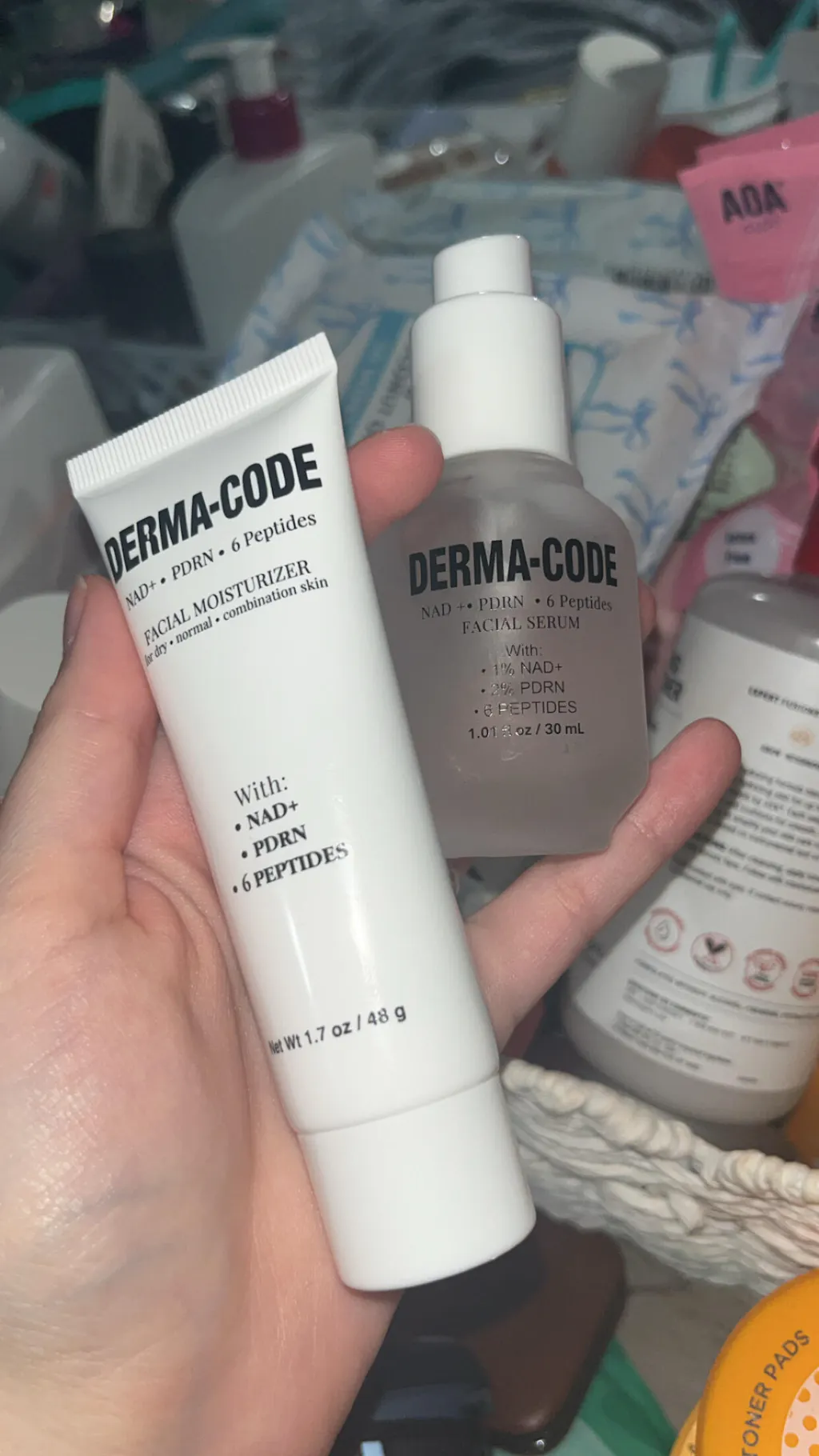
The DERMA-CODE™ Pulse Serum is formulated around PDRN’s repair-supportive pathway. For a complete barrier-first routine, see the full system.
References
[1] He Q, et al. Bioactive Oligopeptides and the Application in Skin Regeneration and Rejuvenation. Journal of Cosmetic Science. 2025.
https://journals.sagepub.com/doi/full/10.1177/22808000251330974
[2] Li F, et al. Clinical Evidence of the Efficacy and Safety of a New Multi-Peptide Anti-Aging Topical Eye Serum. Journal of Cosmetic Dermatology. 2023;22(12):3340-3346.
https://onlinelibrary.wiley.com/doi/10.1111/jocd.15849
[3] PMC. Acetyl Hexapeptide-8 in Cosmeceuticals A Review of Skin Permeability and Efficacy. 2025.
https://pmc.ncbi.nlm.nih.gov/articles/PMC12193160/
[4] CIR Safety Assessment. Safety Assessment of Tripeptide-1, Hexapeptide-12, Their Metal Salts and Fatty Acyl Derivatives, and Palmitoyl Tetrapeptide-7 as Used in Cosmetics.
https://www.cir-safety.org/sites/default/files/tripep032014tent.pdf
[5] Flagler MJ, et al. Combinations of Peptides Synergistically Activate the Regenerative Capacity of Skin Cells In Vitro. International Journal of Cosmetic Science. 2021.
https://onlinelibrary.wiley.com/doi/abs/10.1111/ics.12725
[6] PMC. Usage of Synthetic Peptides in Cosmetics for Sensitive Skin. 2021.
https://pmc.ncbi.nlm.nih.gov/articles/PMC8400021/
0 comments