
Inside a Real Clinical Evaluation: From Ethics Review to Statistical Analysis
Most brands describe their products as clinically evaluated. Very few explain what that actually involved.
This article walks through what a rigorous finished-formula clinical evaluation looks like from the inside not to describe results, but to explain the process. What happens before a single participant is enrolled. How skin is measured objectively. Why each methodological decision matters. And what it means for a brand to make that process fully transparent.
Understanding the process changes how you read any clinical claim.
Why Finished-Formula Testing Is a Different Thing
An ingredient can perform one way in isolation and behave differently once incorporated into a finished formula.
When a raw material supplier studies a peptide, they test that ingredient at a specific concentration in a controlled environment designed to make it perform. That is legitimate science. It tells you what the ingredient can do under ideal conditions.
It does not tell you what happens when that ingredient is combined with twenty or more others at specific concentrations, in a specific pH environment, in a specific emulsion system, under real-world use conditions over multiple weeks.
That distinction is where rigorous clinical evaluation begins.
Before Any Participant Is Enrolled: The Ethics Review
A legitimate clinical study does not begin with recruitment. It begins with review.
Before a single volunteer is approached, the full study protocol including design, methodology, participant protections, informed consent procedures, and adverse event monitoring is submitted to an independent Research Ethics Board, also known in the United States as an Institutional Review Board.
The board evaluates whether the study design is scientifically sound, whether participants are adequately protected, and whether the risk to volunteers is justified by the expected knowledge gained. According to PMC research on clinical protocol design in cosmetic dermatology, institutional ethical review board approval is a necessary requirement for any research involving human participants and the study cannot begin until written approval is received.[1]
This step matters because an independent body reviews and approves the methodology before any data is collected. It is not a formality. It is a checkpoint that separates a structured study from a brand-run test.
In addition to ethics review, a rigorous study includes toxicology assessment confirming the formula presents no toxicological concern at the concentrations used and microbiology assessment, confirming the product meets safety standards for microbial contamination. Both are completed before the study begins.
Study Design: Why the Decisions Matter
Every element of a study design is a decision that affects the reliability of the results.
The number of volunteers matters. A study with a small number of participants tells a different story than one designed to evaluate a broader population. Larger enrollment means results are less likely to reflect individual variation and more likely to reflect how the product performs across a range of skin types and conditions.
The duration matters. A two-week study captures early response. A ten-week study captures sustained performance whether results build, hold, or diminish over consistent use. Ten weeks is also long enough to observe any tolerability concerns that might not appear in short-term testing.
The timepoints matter. Taking measurements at baseline before any product use what researchers call T0 and then again at weeks two, five, and ten creates a trajectory rather than a snapshot. It shows not just whether something changed, but when it changed and whether that change continued.
Adverse event monitoring throughout the study means any unexpected reactions are documented, not dismissed. Volunteer withdrawal monitoring tracks whether participants leave the study and why. These are not bureaucratic requirements they are data integrity measures.
How Skin Is Actually Measured
This is where objective clinical evaluation separates itself from opinion.
Consumer perception studies ask participants how their skin feels. Instrumental clinical studies measure what the skin is doing with devices that produce numbers, not impressions.
Together these instruments answer questions that consumer surveys cannot: Is hydration actually increasing? Is the barrier measurably improving? Is visible redness objectively decreasing? Is texture quantifiably changing?
The Dermatologist Assessment: Why Blinding Matters
In addition to instrument-based measurement, a rigorous study includes independent dermatologist evaluation with one critical design element that determines whether those assessments are meaningful.
The dermatologist is blinded.
Blinded grading means the clinician evaluating each participant's skin does not know which participant is which, or what results the instruments have already recorded. They assess what they observe fine lines, wrinkle depth, overall skin quality using validated clinical grading scales, without any information that could influence their judgment.
This matters because human evaluation, even by trained clinicians, is susceptible to expectation bias. If a dermatologist knows a participant has been using a product for ten weeks, that knowledge can unconsciously influence their assessment. Blinding removes that variable. The assessment reflects what the skin actually looks like, not what the evaluator expects it to look like.
Standardized photography at baseline and each follow-up timepoint creates a visual record under controlled conditions consistent lighting, angles, and distance so that changes can be observed and compared without variability introduced by different photography setups.
Predefined Endpoints and Statistical Analysis
One of the most important features of a legitimate clinical study is something most consumers never think about: the endpoints are defined before data collection begins.
Predefined endpoints mean the study specifies in advance what it is measuring and what would constitute a meaningful change. This prevents a practice sometimes called endpoint fishing analyzing data after the fact to find whatever result looks favorable and reporting that as the primary finding.
When endpoints are predefined and a formal statistical analysis plan governs how data is interpreted, the results mean something. Paired statistical comparisons between baseline and follow-up timepoints establish whether observed changes are statistically significant or could have occurred by chance.
The final clinical investigation report documents everything methodology, raw data, statistical analysis, adverse events, and conclusions in a form that can be reviewed, challenged, and verified.
What Transparency Looks Like After the Study
A brand that conducts a study like this faces a choice when the results come in: share them or keep them internal.
Keeping results internal is common. Brands fund studies, receive reports, selectively reference favorable findings in marketing, and never make the full methodology or data available for scrutiny.
Publishing the full report methodology, instruments, timepoints, statistical analysis, adverse event monitoring, and results is a different choice. It means the work is visible to anyone who wants to examine it. The methodology is not hidden behind a claim. It is documented and available.
The questions worth asking of any brand that claims clinical evaluation are the same ones that apply here.
- Was it done on the finished product or on an isolated ingredient?
- Were instruments used or was it consumer perception?
- Was the dermatologist blinded?
- Were endpoints predefined?
- Has the full report been made available?
The answers to those questions tell you more than any claim on a label.
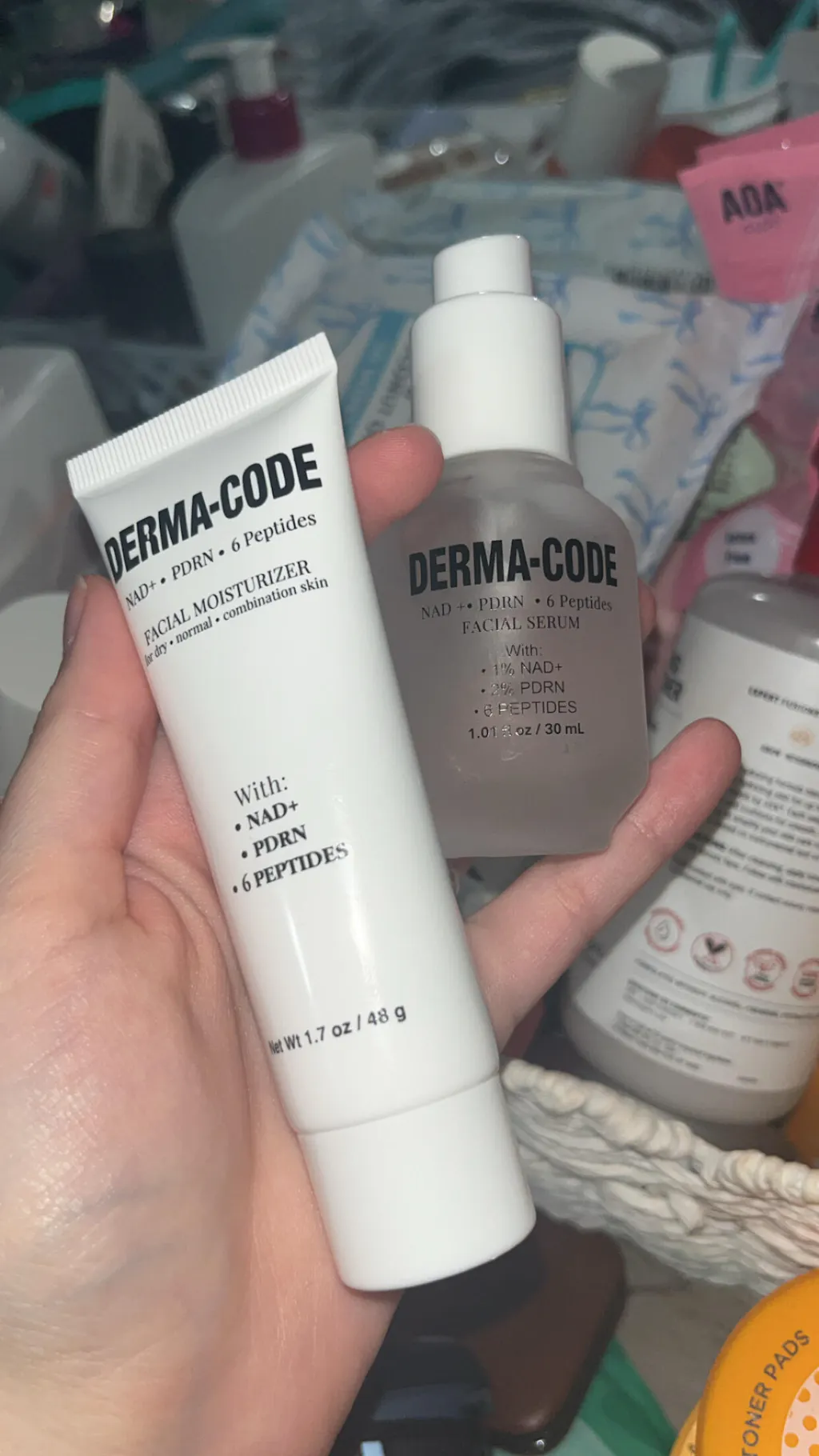
The products evaluated in this study are the DERMA-CODE™ Pulse Serum and Locked-In Moisturizer.
References
[1] PMC. How to Design and Write a Clinical Research Protocol in Cosmetic Dermatology. 2013.
https://pmc.ncbi.nlm.nih.gov/articles/PMC3699935/
[2] ClinicalTrials.gov. Corneometer Measurement Methodology. A Proof of Concept Clinical Study to Investigate the Effects of an Experimental Cosmetic Moisturiser. 2017.
https://clinicaltrials.gov/study/NCT03216265
[3] GlaxoSmithKline Clinical Protocol 209638. TEWL Measurement Methodology.
https://cdn.clinicaltrials.gov/large-docs/10/NCT03804710/Prot_001.pdf
[4] Roessle A, Kerscher M. Objectification of Skin Surface Evenness: In Vivo Evaluation of 300 Women in Relation to Age. Journal of Cosmetic Dermatology. 2025.
https://pmc.ncbi.nlm.nih.gov/articles/PMC12374563/
[5] PMC. Skin Measurement Devices to Assess Skin Quality: A Systematic Review on Reliability and Validity. 2022.
https://pmc.ncbi.nlm.nih.gov/articles/PMC9299221/
0 comments