
NAD⁺ and Niacinamide in Skincare: What the Science Actually Shows
Niacinamide is one of the most studied ingredients in modern dermatology. It is reliable, well-tolerated, and backed by decades of clinical evidence. Its benefits for barrier function, tone, and inflammation are real and well-documented.
But underneath niacinamide's surface-level effects is a deeper biochemical pathway — one that leads to a molecule far more fundamental to how skin cells actually function.
That molecule is NAD⁺ nicotinamide adenine dinucleotide.
Understanding the relationship between these two molecules, and what each one actually does inside the skin, changes how you evaluate both of them.
What NAD⁺ Actually Is
NAD⁺ is a coenzyme present in every living cell. It is not a trendy ingredient. It is a fundamental biological molecule involved in processes the skin depends on to function at a basic level.
A 2023 review published in Endocrine Reviews described NAD⁺'s role as encompassing cellular energy generation, redox reactions, and signaling pathways that regulate health and aging with NAD⁺ levels declining consistently throughout life and in response to chronic stress, inflammation, and environmental damage.[1]
NAD⁺ serves as the sole substrate for PARP poly(ADP-ribose) polymerase the nuclear enzyme responsible for DNA repair. A study published in PLOS ONE examined NAD⁺ metabolism specifically in human skin tissue samples across a wide age range and found a strong negative correlation between NAD⁺ levels and age in both males and females. The same study found that as oxidative DNA damage accumulated with age, PARP activity increased and this increase inversely correlated with tissue NAD⁺ levels, suggesting that age-related DNA damage places increasing demand on NAD⁺ reserves.[2]
NAD⁺ also activates sirtuins a family of proteins involved in cellular stress resistance, metabolic regulation, and longevity signaling. And it supports mitochondrial function, which determines how efficiently skin cells generate the energy they need for repair, renewal, and barrier maintenance.
What Niacinamide Actually Is
Niacinamide is a form of vitamin B3 and one of the most clinically versatile topical ingredients available. Its documented benefits include barrier reinforcement, reduction of visible redness and inflammation, improvement in skin tone and pigmentation, and oil regulation.
It also enters the NAD⁺ salvage pathway meaning cells can convert niacinamide into NAD⁺ through a series of enzymatic steps. This conversion is part of why niacinamide has documented effects that extend beyond the surface layer.[3]
But the conversion has limits.
Research on NAD⁺ precursors in human skin keratinocytes found that conversion efficiency is cell-type dependent and influenced by the enzymatic environment within the skin.[4] When skin is aged, stressed, inflamed, or environmentally depleted, the enzymatic steps required for conversion can slow meaning topical niacinamide may continue to deliver its direct surface benefits while contributing less meaningfully to cellular NAD⁺ levels than it would in healthy, unstressed skin.
The Core Difference
Niacinamide works at the skin surface and feeds a pathway that may or may not produce meaningful NAD⁺ depending on the skin's current enzymatic capacity.
NAD⁺ supplied as the active coenzyme does not require cellular conversion though whether topical NAD⁺ reaches viable skin layers and meaningfully elevates intracellular levels depends on formulation stability and delivery architecture, questions the emerging research continues to address.
A 2024 study published in PMC examined the pharmacological effects of exogenous NAD⁺ on human fibroblasts and found that topical supplementation with NAD⁺ could elevate both cellular and systemic NAD⁺ levels and that exogenous NAD⁺ exerted protective effects against both UV-induced extrinsic aging and intrinsic aging mechanisms.[5]
The distinction is not that niacinamide is ineffective. It is that the two molecules operate at different levels of the same system. Niacinamide is a precursor that supports the pathway. NAD⁺ is the active coenzyme the pathway is trying to produce.
What the Research Shows Side by Side
| Niacinamide | NAD⁺ | |
|---|---|---|
| Classification | Vitamin B3 precursor | Active coenzyme |
| Primary mechanism | Barrier support, anti-inflammatory signaling, enters NAD⁺ salvage pathway | DNA repair via PARP activation, mitochondrial energy support, sirtuin activation |
| Conversion required | Converts to NAD⁺ through enzymatic steps | Supplied as the active coenzyme |
| Conversion efficiency | Depends on skin's enzymatic capacity may slow with age or stress [4] | No conversion required |
| Research depth | Decades of clinical evidence for topical use | Growing body of evidence; strongest data from systemic research with emerging topical literature [5] |
| Stability in formula | Highly stable | Oxidizes under light and heat; requires appropriate formulation environment to remain active |
| Suitable for | All skin types; widely tolerated | Formulations capable of maintaining NAD⁺ stability |
An Important Caveat on Topical NAD⁺
The strongest body of NAD⁺ research comes from systemic supplementation oral, intravenous, and intramuscular administration. Topical NAD⁺ research is newer and still developing.
A 2026 review published in Cosmoderma noted that while interest in NAD⁺ for dermatological applications is growing particularly for photoaging, DNA repair, and skin resilience most claims regarding cosmetic rejuvenation with NAD⁺ precursors remain in early-phase translational research, and topical delivery presents formulation challenges that not all products address.[6]
Key Takeaways
- Niacinamide and NAD⁺ are not competitors. They are parts of the same biochemical system operating at different levels.
- Niacinamide is a well-documented, highly stable topical ingredient that supports the skin surface and enters the NAD⁺ precursor pathway. Its benefits are real and consistent across a broad range of skin types.
- NAD⁺ is the active coenzyme that cellular energy, DNA repair, and sirtuin signaling all depend on. Research specifically conducted on human skin tissue found a strong negative correlation between NAD⁺ levels and age, with increasing DNA damage placing growing demand on NAD⁺ reserves over time.
- Both require consistency over time to show meaningful results.
- NAD⁺ requires proper stabilization in any topical formula to remain active. Molecular protection from oxidation and an appropriate formulation environment are not optional they are what determine whether topical NAD⁺ functions or degrades before it can contribute anything.
- The topical NAD⁺ research base is growing but still newer than systemic research. Results should be evaluated within that context the mechanism is well-established; the topical delivery science continues to develop.
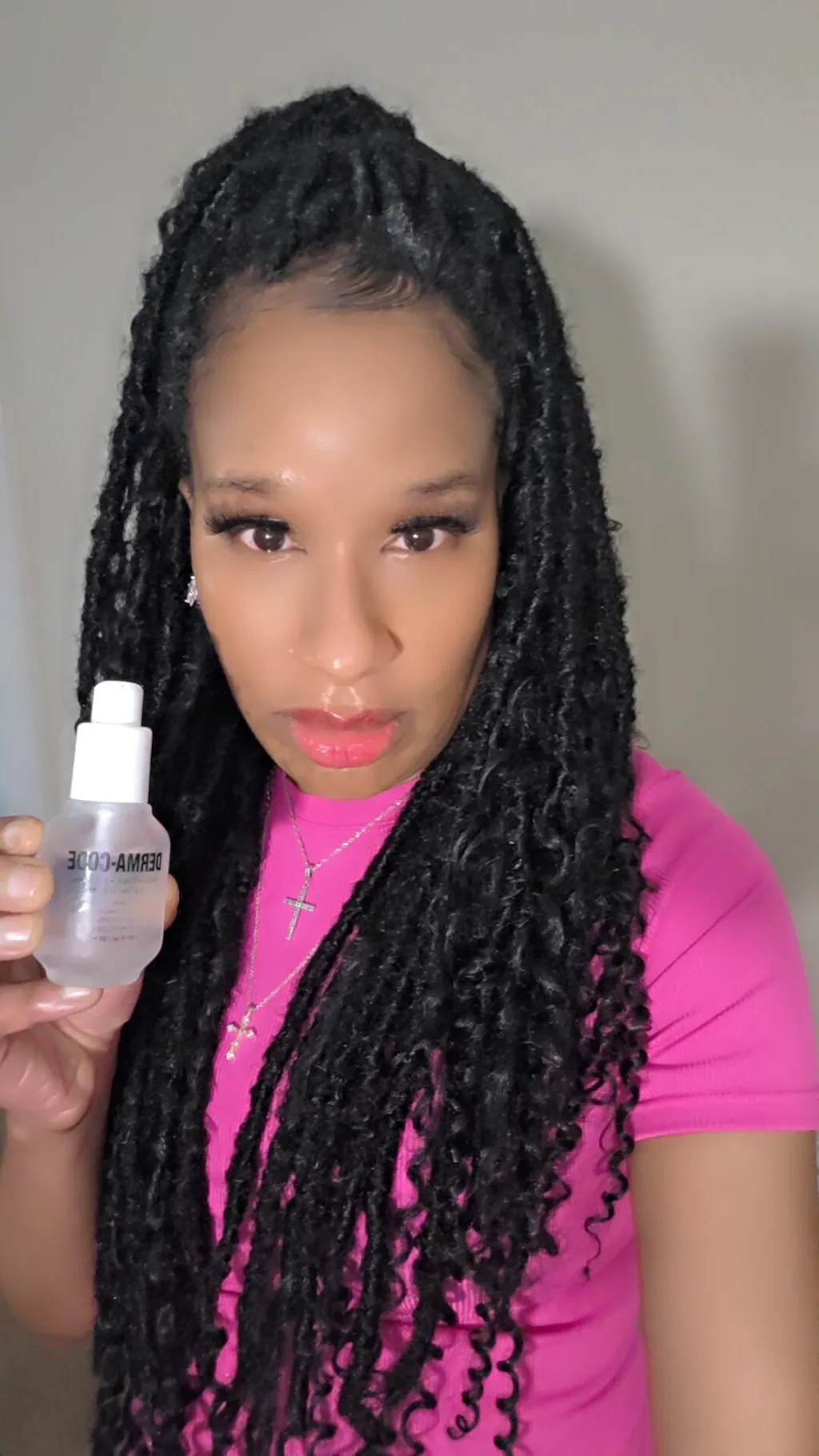
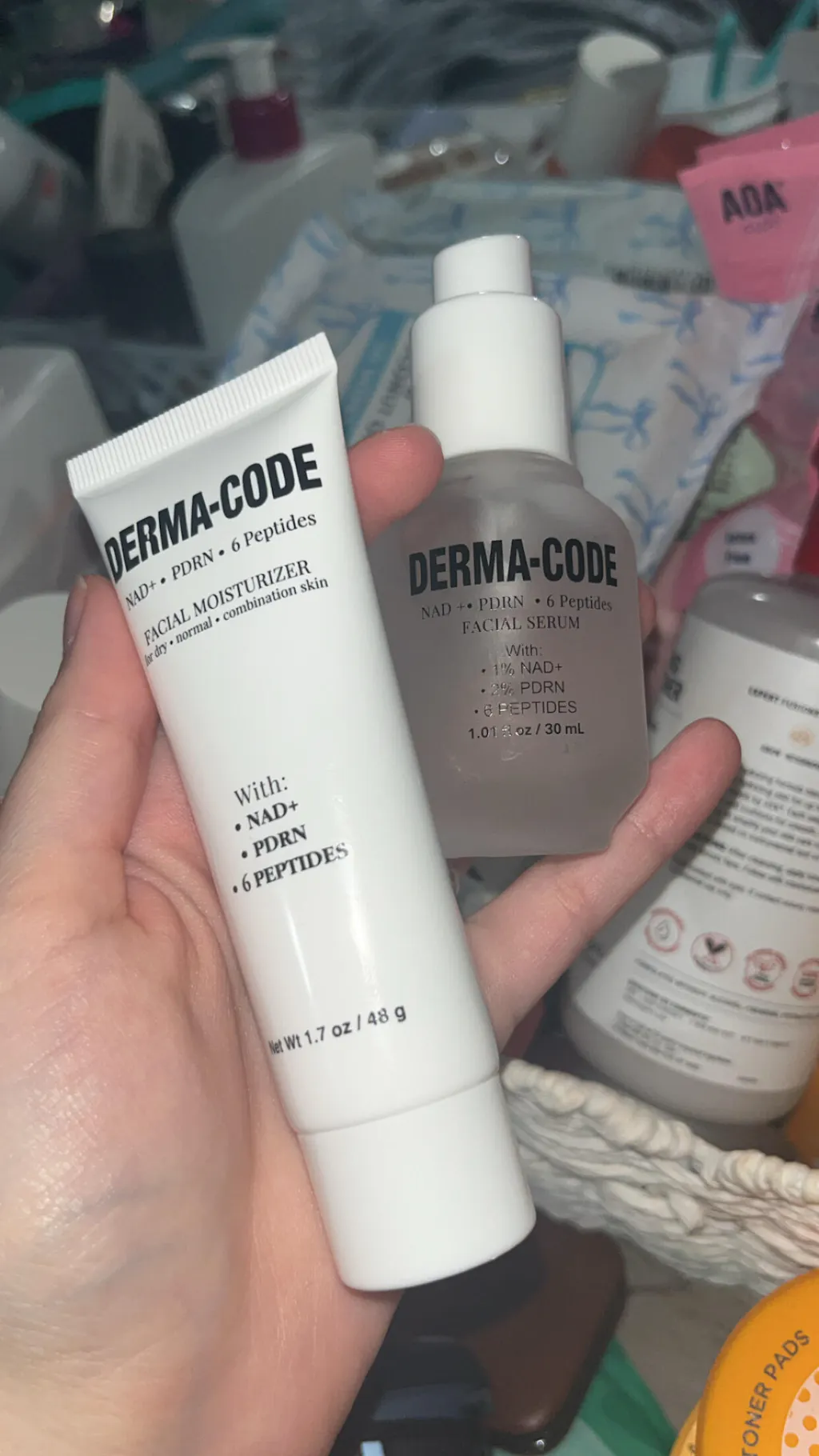
The DERMA-CODE™ Pulse Serum delivers both NAD⁺ at 1% and Niacinamide as part of the same formula.
References
[1] Bhasin S, et al. Nicotinamide Adenine Dinucleotide in Aging Biology: Potential Applications and Many Unknowns. Endocrine Reviews. December 2023.
https://academic.oup.com/edrv/article/44/6/1047/7207987
[2] Massudi H, et al. Age-Associated Changes in Oxidative Stress and NAD⁺ Metabolism in Human Tissue. PLOS ONE. 2012.
https://journals.plos.org/plosone/article?id=10.1371/journal.pone.0042357
[3] PMC. Role of Nicotinamide in Genomic Stability and Skin Cancer Chemoprevention. 2019.
https://www.ncbi.nlm.nih.gov/pmc/articles/PMC6929077/
[4] PMC. Supplementation of Nicotinic Acid and Its Derivatives Up-Regulates Cellular NAD⁺ Level Rather than Nicotinamide Derivatives in Cultured Normal Human Epidermal Keratinocytes. 2024.
https://www.ncbi.nlm.nih.gov/pmc/articles/PMC10971338/
[5] PMC. Novel Approach to Skin Anti-Aging: Boosting Pharmacological Effects of Exogenous Nicotinamide Adenine Dinucleotide (NAD⁺) by Synergistic Inhibition of CD38 Expression. 2024.
https://pmc.ncbi.nlm.nih.gov/articles/PMC11544843/
[6] Cosmoderma. The Emerging Potential of Nicotinamide Adenine Dinucleotide (NAD⁺) Precursors in Dermatological Health and Anti-Aging. 2026.
https://cosmoderma.org/the-emerging-potential-of-nicotinamide-adenine-dinucleotide-nad-precursors-in-dermatological-health-and-anti-aging-elixir-of-life/
0 comments